
Proteomics is the large-scale study of protein composition and regulatory networks, leveraging high-resolution separation and high-efficiency identification technologies. It aims to characterize the composition (qualitative analysis), expression levels (quantitative analysis), and modification status (post-translational modifications) of proteins, while also elucidating their interactions. Through these approaches, researchers can gain a comprehensive, integrated understanding of disease pathogenesis, cellular metabolism, growth and development, and stress responses at the protein level.
Proteomic technologies are primarily categorized into quantitative proteomics and post-translational modification (PTM) proteomics. Quantitative proteomics focuses on the qualitative and quantitative analysis of the entire proteome expressed by a genome, or all proteins within a complex biological system. Major quantitative approaches include label-free quantification, TMT (Tandem Mass Tag), DIA (Data-Independent Acquisition), and PRM (Parallel Reaction Monitoring). Meanwhile, PTM proteomics investigates the impact of protein post-translational modifications on biological processes.
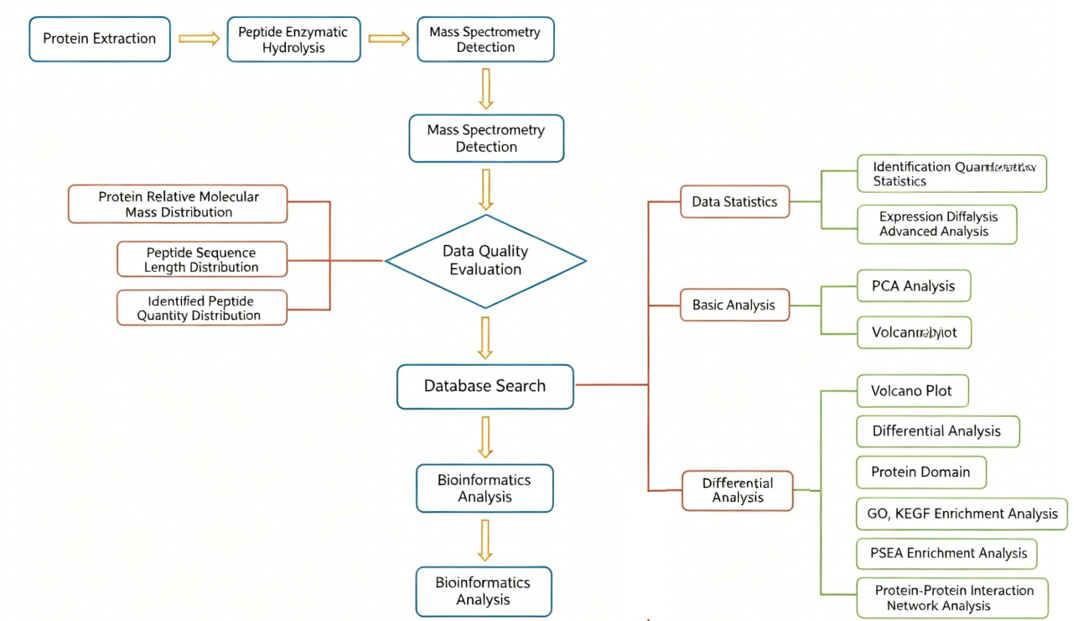
Workflow
Appications
lBasic Research: Physiology, pathology, and mechanisms of drug action
lPrecision Medicine: Drug development and personalized therapy
lClinical Diagnostic Research: Biomarker discovery and drug screening
lPlant Biology: Stress resistance mechanisms, growth and development, breeding, and conservation research
lAnimal Husbandry: Meat and milk quality evaluation, and pathogenesis research
lMicrobiology & Food Nutrition: Storage condition optimization, quality authentication, and safety monitoring


 WeChat QR Code