
Q1: What are the characteristics of scRNA-seq and snRNA-seq?
scRNA-seq (Single-cell RNA sequencing)
As the current mainstream approach, scRNA-seq is highly effective at preserving distinct cell subpopulation features, making it exceptionally suitable for immunology-related research projects.
1. Sample limitations: The requirement for fresh tissue suspensions restricts the broader application of this technology. Consequently, many valuable cryopreserved samples with significant research and clinical relevance cannot be analyzed using this method.
2. Loss of sensitive cells: Certain sensitive cell types (e.g., neurons, hepatocytes) are prone to rupture or damage during the enzymatic dissociation process.
3. Unsuitable for specific tissues: It is less effective for tissues containing large or irregularly shaped cells, such as cardiac tissue and mature adipocytes.
snRNA-seq (Single-nucleus RNA sequencing)
1. Simplified sampling and storage: The process is more flexible; fresh tissues can be snap-frozen immediately, and samples stored at -80°C can be readily utilized, making it ideal for biobanked specimens.
2. Optimal for complex tissues: It is the preferred method for extracting transcriptomic data from brain/neuronal tissues, mature adipocytes, and cardiomyocytes, as these cell types are often too large or fragile to survive the dissociation required for scRNA-seq.
3. Impact on immune cells: The nucleus extraction protocol can significantly impact immune cells, potentially affecting their recovery or representation compared to whole-cell methods.
Q2: How to decide between scRNA-seq and snRNA-seq?
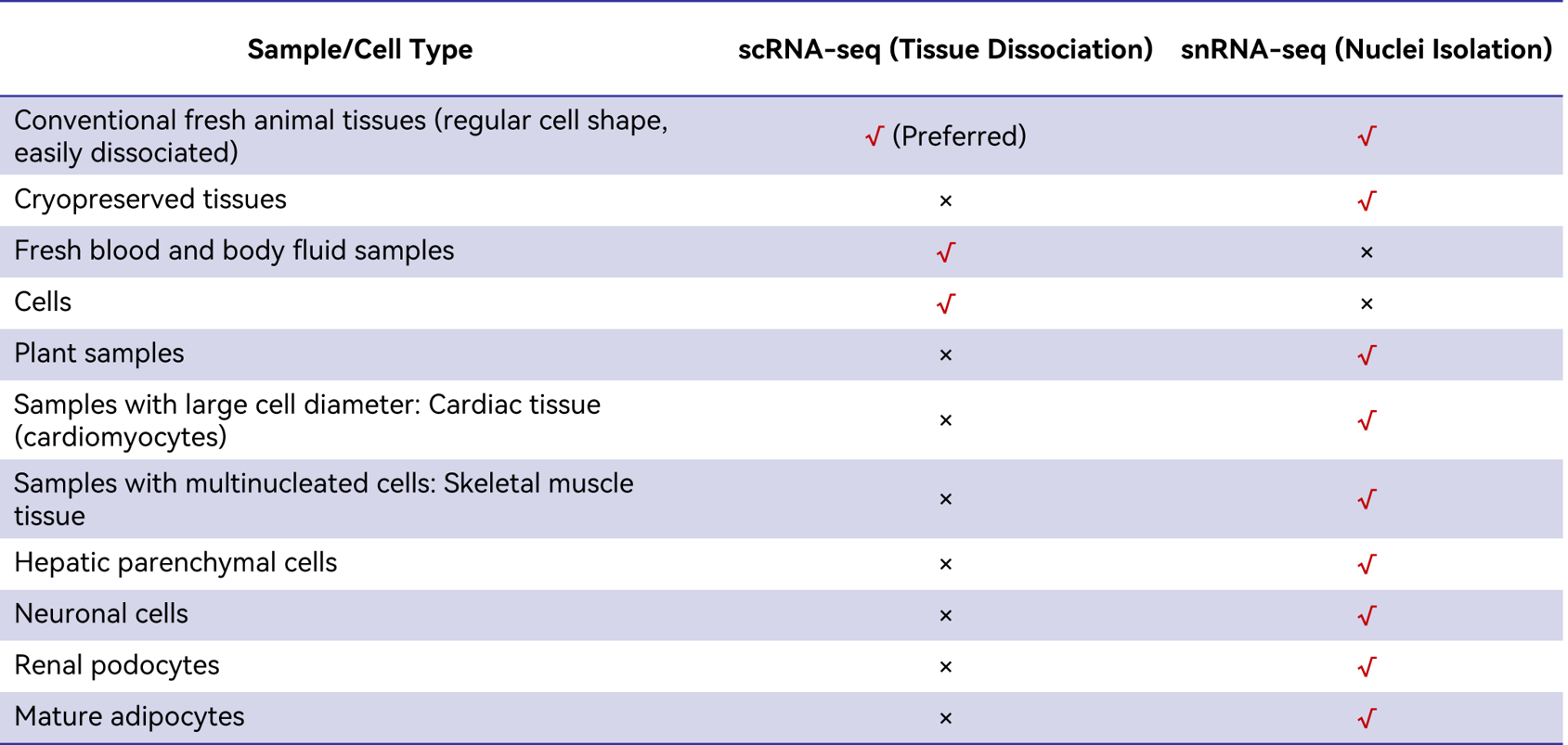
Q3: Will tissue dissociation and nucleus extraction yield different cell type proportions?
(1) Tissue Dissociation:
This method typically yields a higher proportion of immune cells, alongside other cell types such as endothelial cells, epithelial cells, and fibroblasts. However, it often fails to capture, or captures very few, large or complex cells. Examples include neurons (brain), cardiomyocytes (heart), multinucleated skeletal muscle fibers (aged muscle), and mature adipocytes (adipose tissue).
(2) Nucleus Extraction:
This approach recovers a higher proportion of parenchymal cells, such as hepatocytes and glomerular podocytes, in addition to the large cell types mentioned above.
Important Note: Liver samples processed via dissociation typically fail to yield hepatocytes, or yield them in extremely low proportions.
Reason: Hepatocytes have very poor tolerance to enzymatic digestion and are highly prone to rupture and cell death. Therefore, if your research specifically focuses on hepatocytes, nucleus extraction is strongly recommended.
Q4: Plant Tissue Samples: Criteria for Sample Rejection
❌ Rejection Type 1: Samples containing soil or other contaminants
Samples with soil require secondary washing before single-cell experiments. The resulting freeze-thaw cycles and residual impurities significantly compromise data quality.
❌ Rejection Type 2: Wet samples with visible ice crystals
Residual moisture on the tissue surface forms ice crystals during freezing. This can lead to the destruction of cellular structures, nuclear rupture, or RNA degradation, ultimately affecting downstream experimental results.
❌ Rejection Type 3: Unseparated target tissues
Our company no longer performs the separation or dissection of target tissues from raw plant material.
❌ Rejection Type 4: Aged or senescent samples
This includes yellowed or wilted leaves, highly lignified stems and bark, seeds stored for multiple years, and senescent (withered) flowers.
❌ Rejection Type 5: Samples shipped in aluminum foil
Aluminum foil is extremely thin and often leads to repeated, localized freeze-thaw cycles during sampling and transport. Each freeze-thaw cycle promotes ice crystal formation, causing severe tissue degradation.
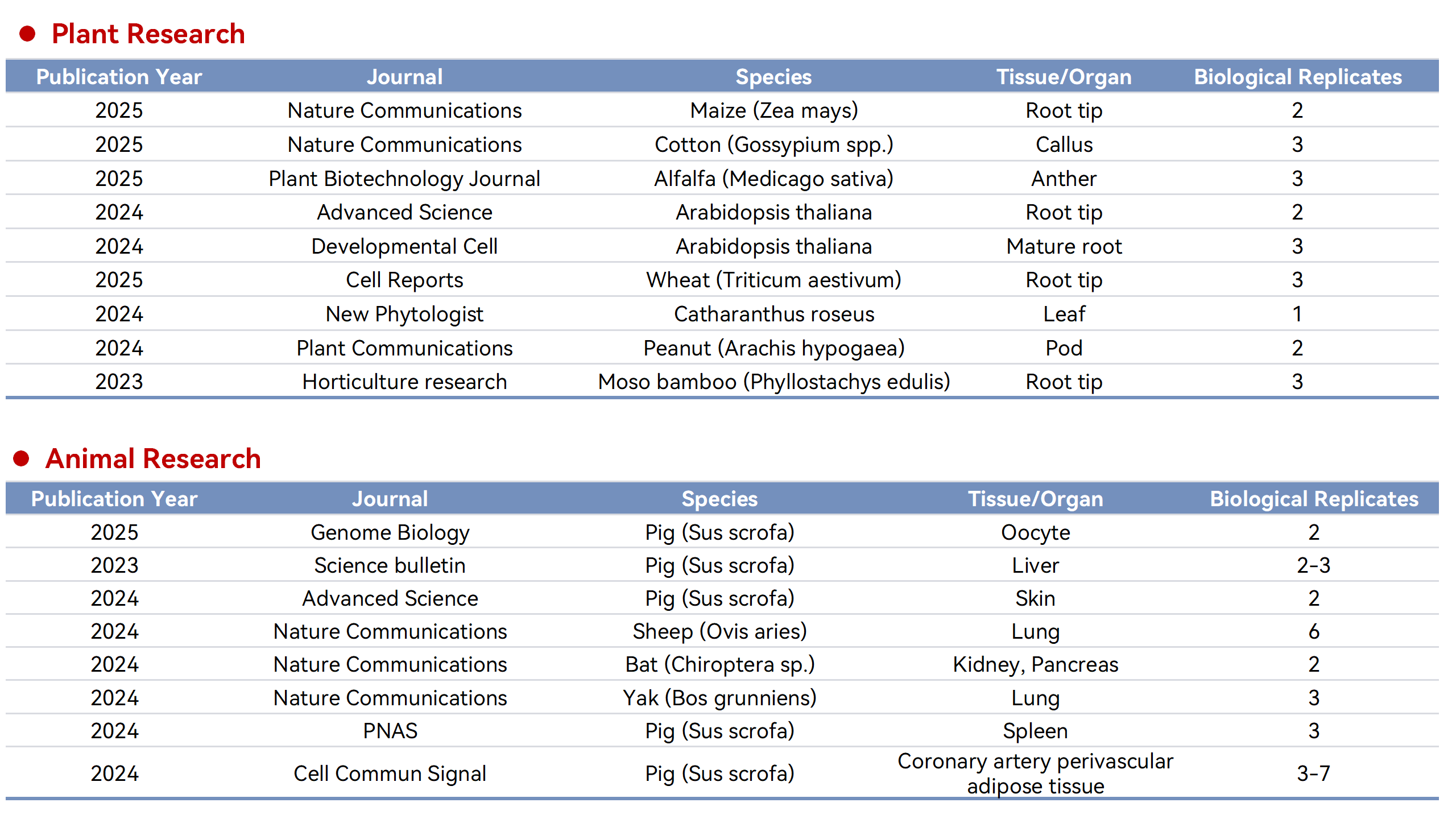
Q5: How many biological replicates should be included?
We recommend including at least 3 biological replicates.


 WeChat QR Code