Over the past decade, single-cell sequencing technology has experienced remarkable development, marked by numerous technological advances and breakthroughs. As a powerful high-throughput method, single-cell RNA sequencing (scRNA-seq) enables a comprehensive analysis of mRNA within individual cells. This capability reveals distinct transcriptional differences and detailed gene expression profiles, allowing researchers to accurately infer cell types, subpopulations, developmental states, and stress responses.
By carrying out multi-omics analysis across DNA, RNA, and epigenomics, high-throughput single-cell sorting and sequencing provide precise genetic information. This is particularly transformative in fields like immunology, where it offers an unprecedented perspective on cellular heterogeneity and uncovers the dynamic changes of immune cells in both health and disease. Ultimately, these technologies are essential for conducting in-depth intercellular heterogeneity analysis, reconstructing complex cell groups, and discovering rare cell populations. Leveraging these innovations, Haorui Genomics provides advanced single-tube single-cell DNA and RNA research, along with high-throughput single-cell research products based on the cutting-edge DNBelab C4 technology.
Experimental Principle and Workflow
Based on droplet microfluidics, this technology employs a dual-bead capture system to efficiently isolate polyadenylated (polyA) mRNA. The process encapsulates individual cells or nuclei, along with barcoded capture beads, into discrete oil-phase droplets.
The standard workflow encompasses the following steps: preparation of single-cell or single-nucleus suspensions, microfluidic chip loading, droplet generation, mRNA capture, reverse transcription, PCR amplification, cDNA purification, and subsequent library construction, quantification, sequencing, and data processing.
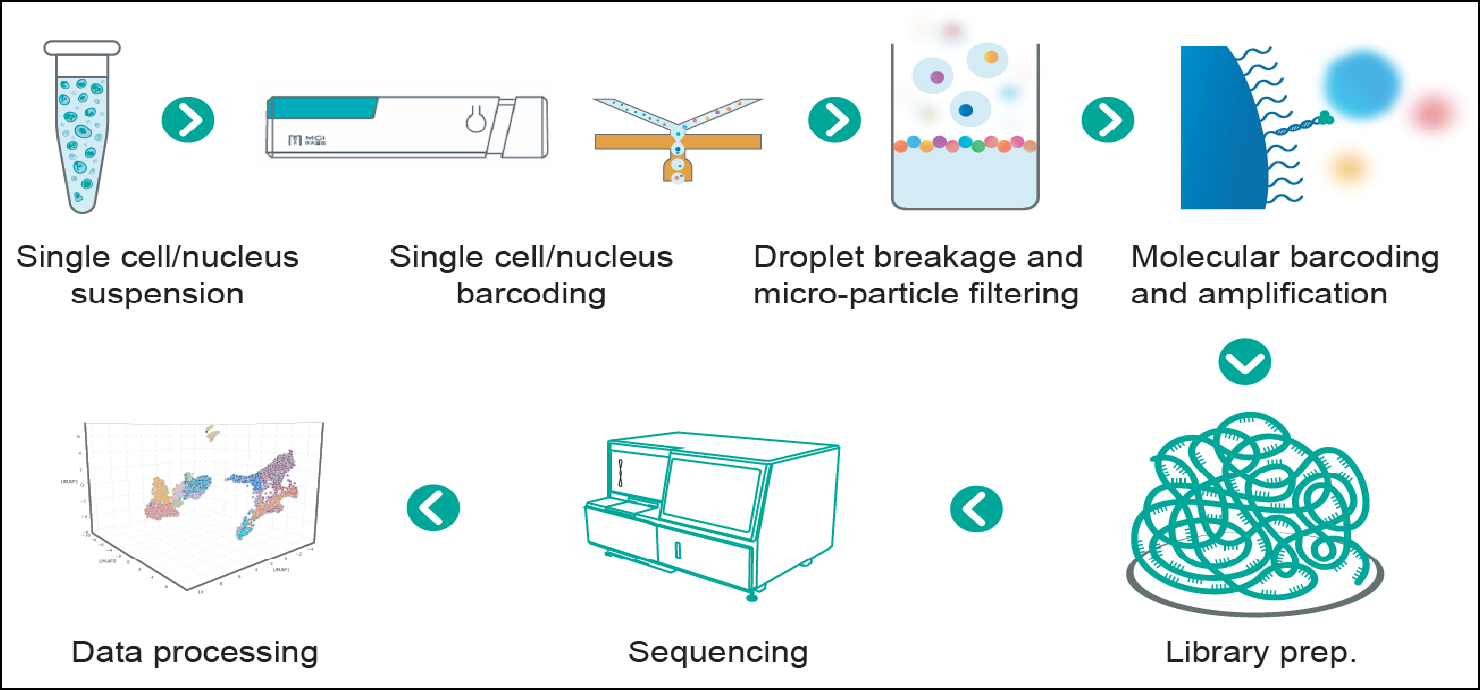
Figure. Experimental principle and workflow
Highlights
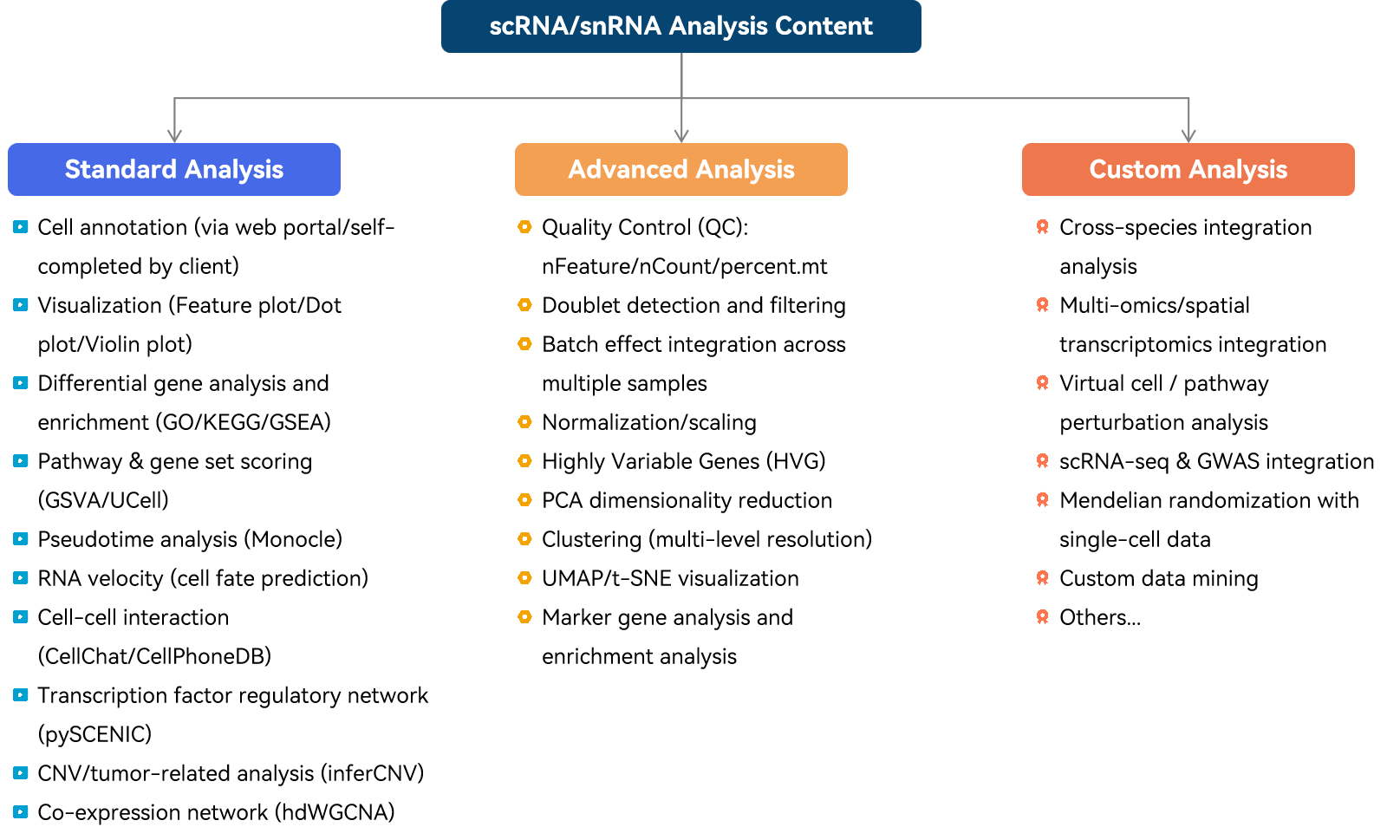
Data Analysis Pipeline


 WeChat QR Code