
Leveraging Baichuang's proprietary patented technology, this "three-in-one" approach seamlessly combines high-definition brightfield and fluorescence imaging with high-throughput sequencing of the original slide. It achieves highly accurate cell segmentation, providing vital cellular spatial context. Elevating spatial transcriptomics to subcellular precision, it has become an invaluable tool in frontier research areas like developmental biology and plant science.
Technical Principle
The BMKMANU S3000 features over 4 million capture sites within a 6.8 mm x 6.8 mm capture area, with a center-to-center distance of 3.5 µm between adjacent sites. After the tissue section placed on the capture area is digested by tissue permeabilization enzymes, the released mRNA molecules are captured by the spatially barcoded probes at the underlying sites. These mRNAs are then reverse-transcribed into cDNA tagged with spatially specific barcodes. Subsequent library preparation, sequencing, and data analysis enable the precise visualization of spatial gene expression.
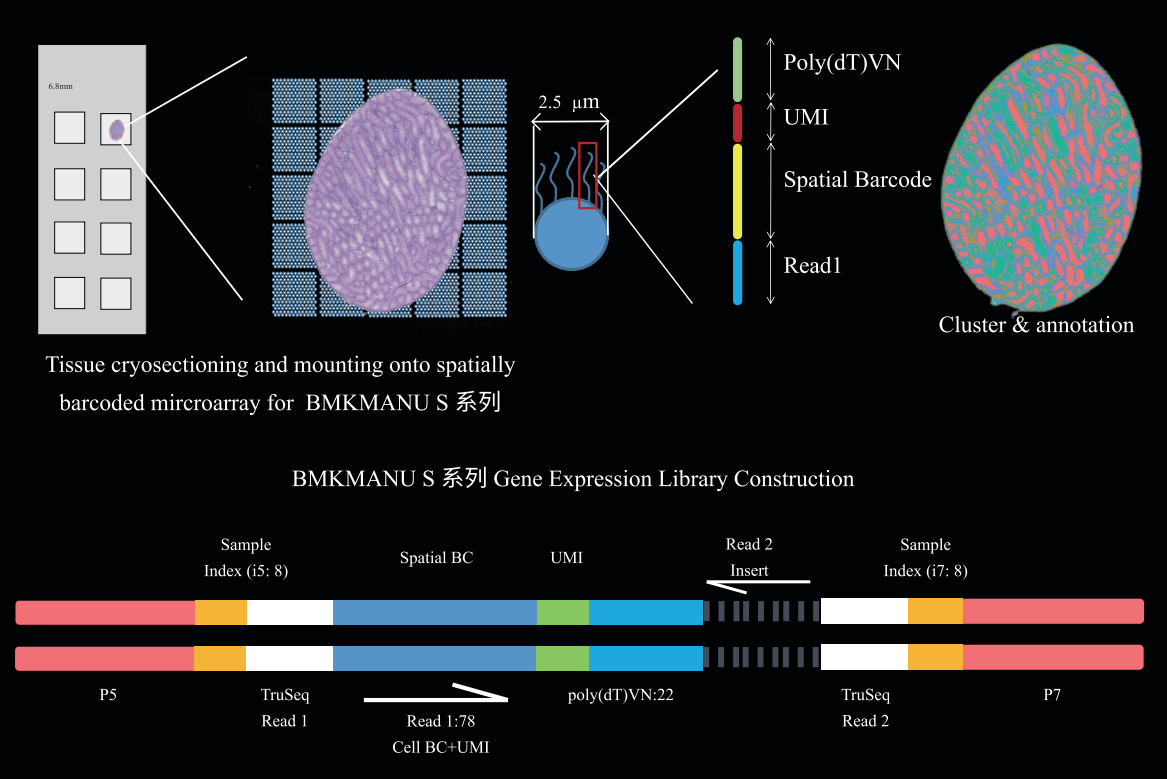
Highlights
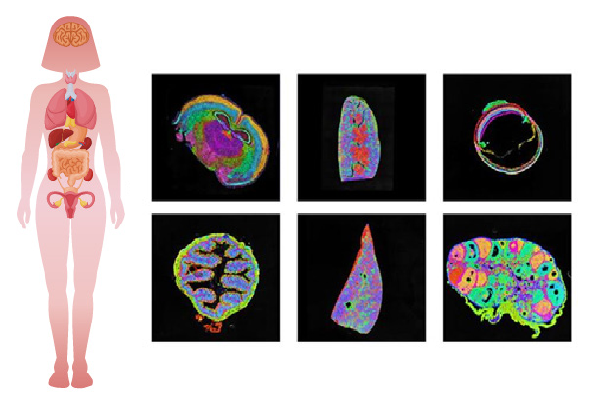
1. Compatible with multiple species, delivering robust performance in plant, animal, and medical research.
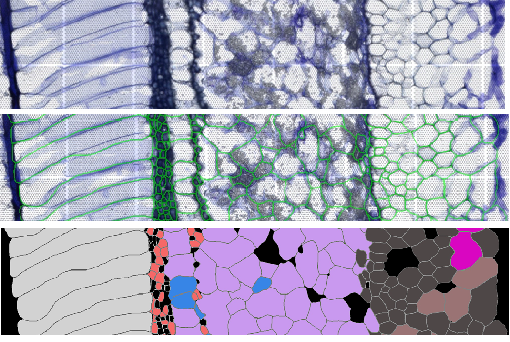
2. Exclusive proprietary plant cell segmentation algorithm.
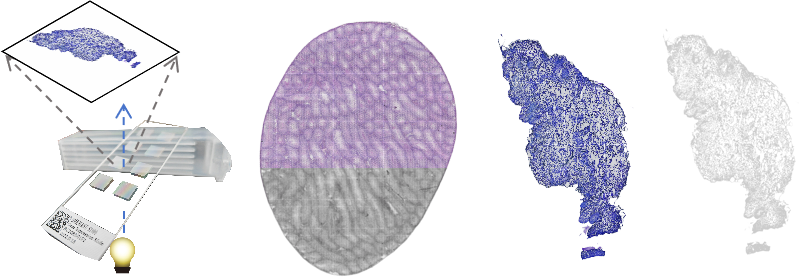
3. High-definition error-free brightfield imaging + error-free fluorescence imaging + high-throughput sequencing on the original tissue section. While preserving HE staining of the expression chip slide, it also supports fluorescent staining, enabling accurate and error-free cell segmentation.
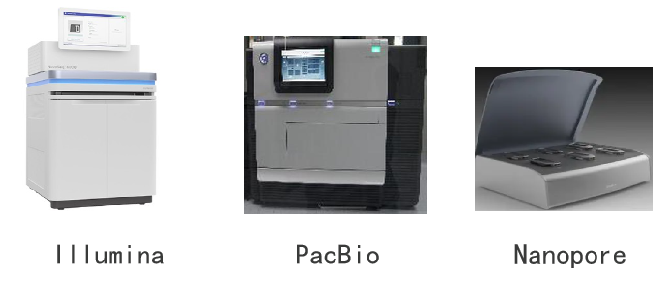
4. The Baichuang S3000 chip offers excellent compatibility with third-generation sequencing, enabling qualitative analysis. It supports sequencing on common second- and third-generation sequencing platforms.
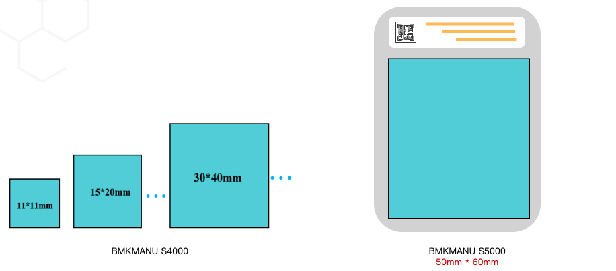
5. Multi-size options with ultra-high resolution
Supports custom sizes from 6.8mm×6.8mm to 50mm×60mm 2.5μm per spot, resolution: 3.5μm
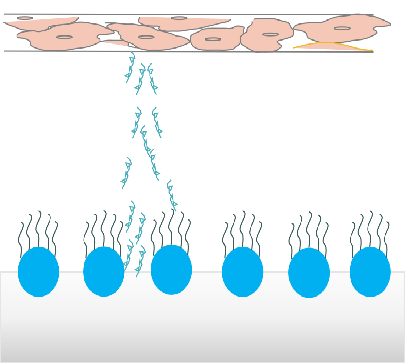
6. This subcellular-resolution spatial transcriptomics chip uses micropore microspheres to reduce the lateral diffusion of mRNA molecules.


 WeChat QR Code