Bacterial Finished Genome refers to the comprehensive sequencing of a species with a previously unknown genome or no closely related reference. By constructing genomic libraries with various insert sizes and leveraging a combination of PacBio third-generation single-molecule sequencing and second-generation high-throughput sequencing, we can assemble the complete chromosome and plasmid sequences using bioinformatics methods. This process fully decodes both the coding information and epigenetic modifications.
A finished genome represents the ultimate resolution of a bacterial genome. The goal is to assemble the bacterial chromosome and its plasmids into complete, gap-free circular or linear structures. This typically requires a powerful synergy between second and third-generation sequencing technologies. Second-generation sequencing provides high-precision single-base information, much like taking high-definition photos of the fine details on each puzzle piece. Meanwhile, third-generation sequencing (such as PacBio or ONT), with its ultra-long reads, easily spans the repetitive regions and complex structures that challenge second-generation methods—acting like the key long strips that connect different sections of the puzzle. By combining both, we can ultimately map out a complete and accurate genomic "blueprint."
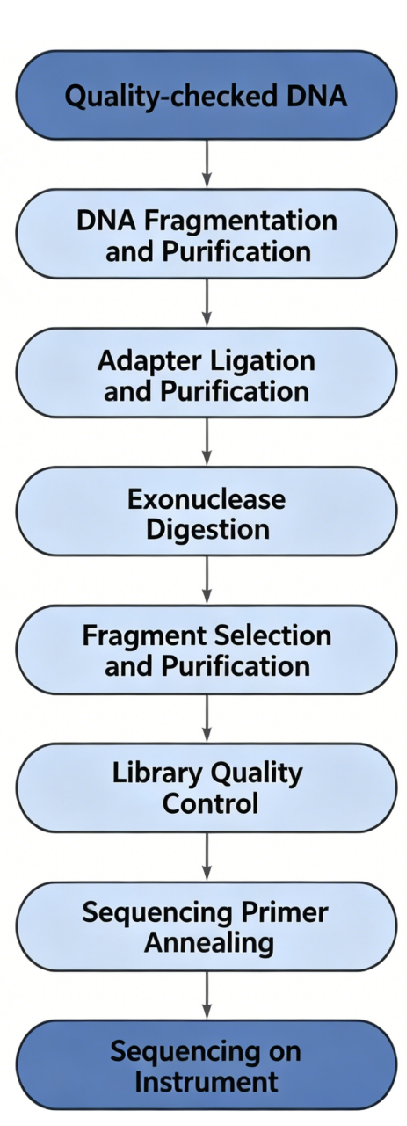
Laboratory Workflow
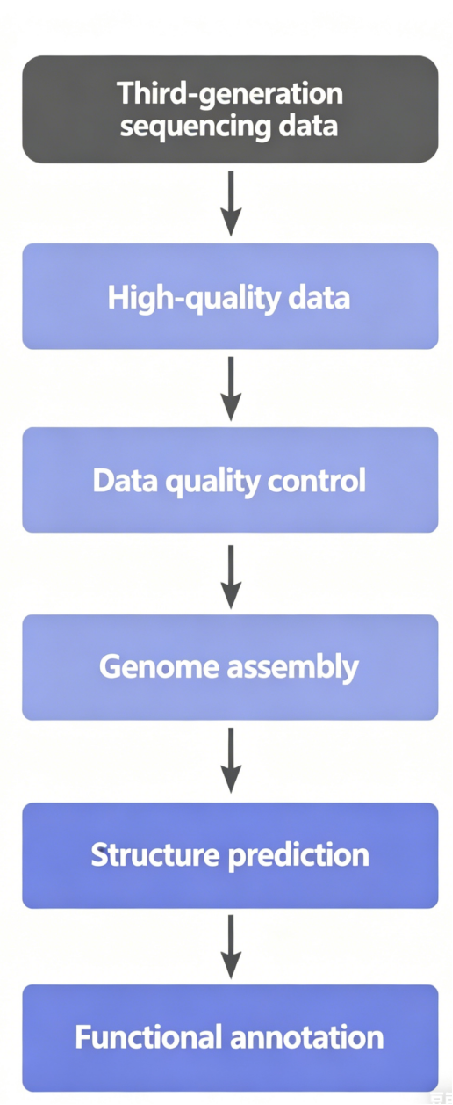
Analysis Workflow
Applications
Pathogenic Microbiology Research
Focus on human infectious diseases, as well as animal and plant infection mechanisms
Industrial Microbiology Applications
Including antibiotic production, microbial fermentation, and microbial-mediated energy utilization
Environmental Sciences
Covering environmental pollution remediation, and development & utilization of microbial resources
Microbial Taxonomy and Evolution Research
Encompassing novel species identification, phylogenetic relationship analysis, synthetic biology and genetic engineering, gene editing and modification, as well as synthetic genome design


 WeChat QR Code