
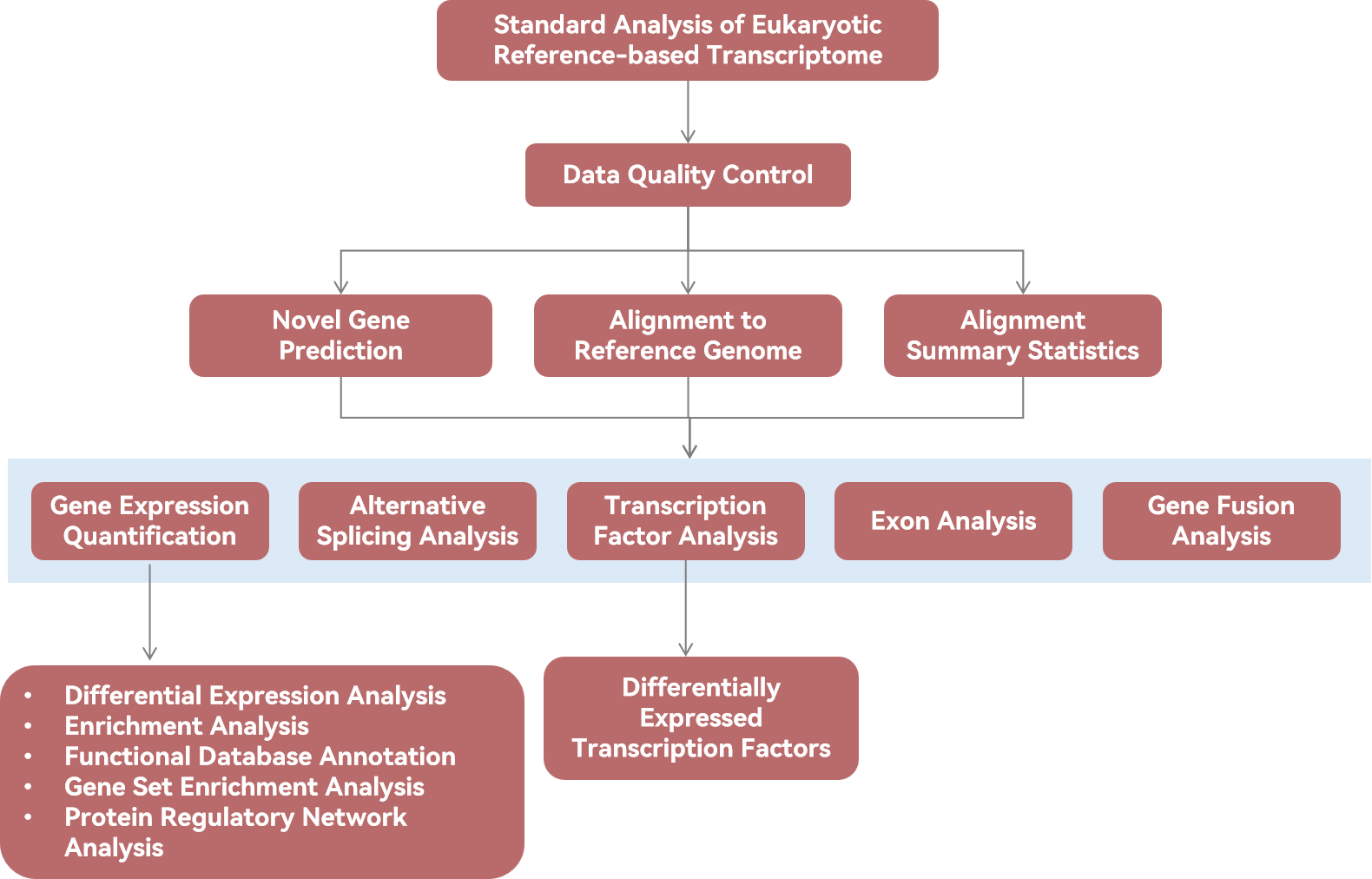
Eukaryotic reference-based transcriptome sequencing utilizes next-generation sequencing (NGS) platforms to sequence all mRNA transcripts from specific tissues or cells at a particular state. By aligning reads to a reference genome, this approach enables comprehensive and rapid analysis of mRNA sequences and abundance, as well as the characterization of gene structure and novel transcripts.
For species lacking a reference genome, de novo transcriptome sequencing involves assembling the sequencing data to generate unigenes, which serve as reference sequences for downstream analysis. This provides a powerful technical approach for investigating transcriptional changes in non-model organisms.
Plant and Animal Growth and Development: Analyzing gene sets with spatiotemporal-specific expression during development or growth processes to map growth profiles.
Stress Response Studies: Investigating organismal response mechanisms under stress conditions.
Trait Variation: Identifying genes underlying important traits or phenotypes of interest.
Interaction Studies: Identifying key regulatory genes or metabolic pathways at the transcriptional level to study host-pathogen or host-symbiont interactions.
Technical Workflow


 WeChat QR Code