
Third-generation full-length transcriptome sequencing utilizes long-read sequencing technologies to directly sequence intact mRNA molecules. This approach overcomes the limitations of traditional second-generation transcriptomics, such as short Unigene contigs and incomplete transcript structures. Consequently, it yields full-length transcript sequences and complete structural information, including 5’ UTRs, 3’ UTRs, and poly-A tails.
📊Applications
Transcriptome Refinement and Genome Annotation: Improving transcript models with a focus on alternative splicing and assisting in genome annotation.
Differential Expression Analysis: Screening for differentially expressed genes or transcripts under varying environmental conditions.
Dynamic and Comparative Transcriptomics: Analyzing dynamic temporal changes and performing comparative transcriptome studies.
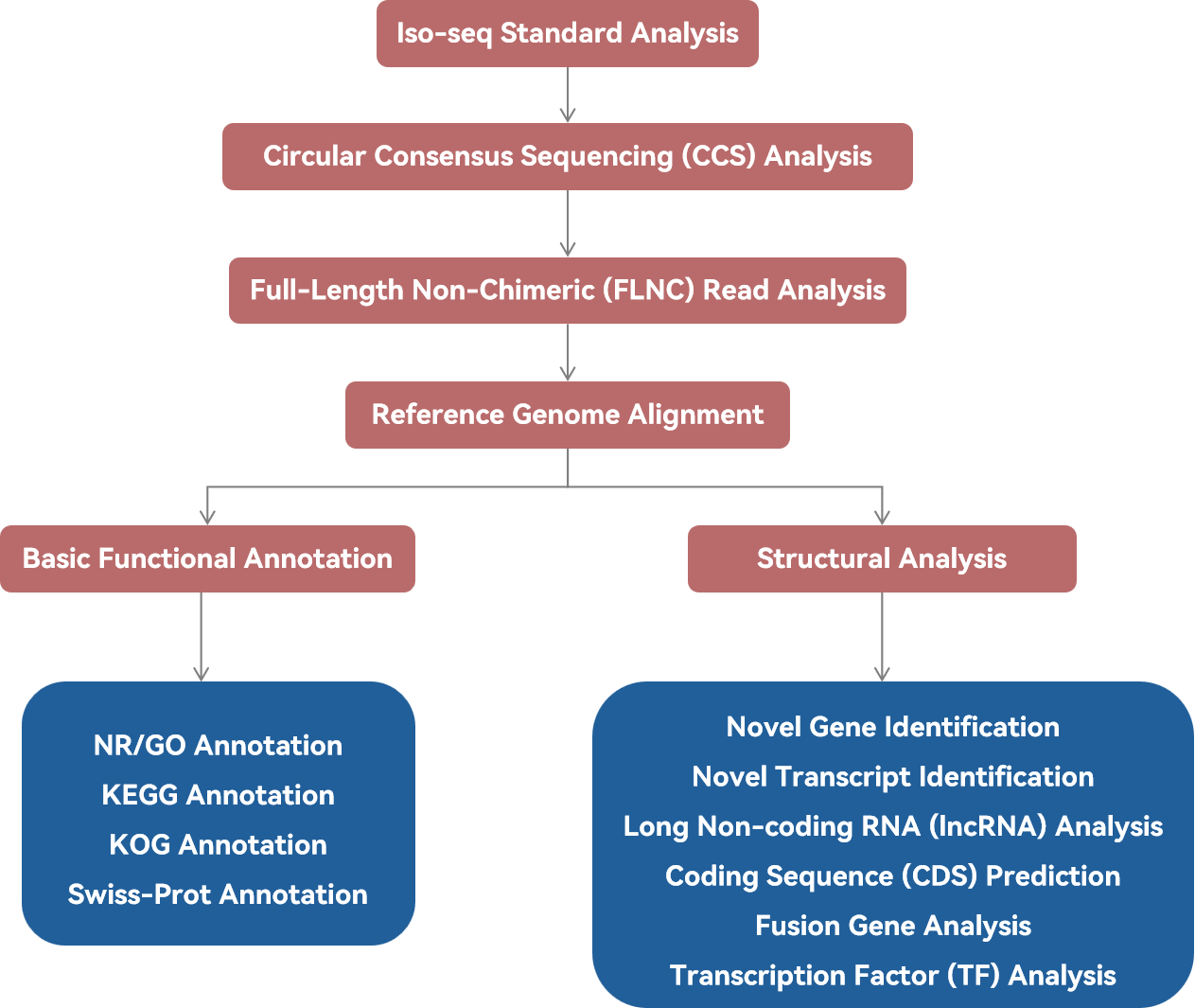
Technical Workflow
Highlights
1. Ultra-Long Reads: With average read lengths of 10–15 kb, this technology captures complete full-length transcript information for eukaryotes in a single read.
2. Error-Free Reconstruction: It eliminates the need for fragmentation and assembly, thereby avoiding assembly errors and chimeric artifacts.
3. Precise Quantification: By leveraging accurate full-length transcript data in conjunction with second-generation (NGS) data, researchers can easily identify isoform-specific expression and perform more precise gene and transcript quantification.
4. Genome Annotation & Correction: For species with reference genomes, full-length transcriptome data can be used to correct assembly errors, accurately discover novel transcripts and genes, and analyze gene fusion events.
5. Native Strand Information: There is no need for strand-specific library construction, as full-length sequencing directly captures information from sense and antisense strands, including specific lncRNAs.


 WeChat QR Code