Rh Genotyping
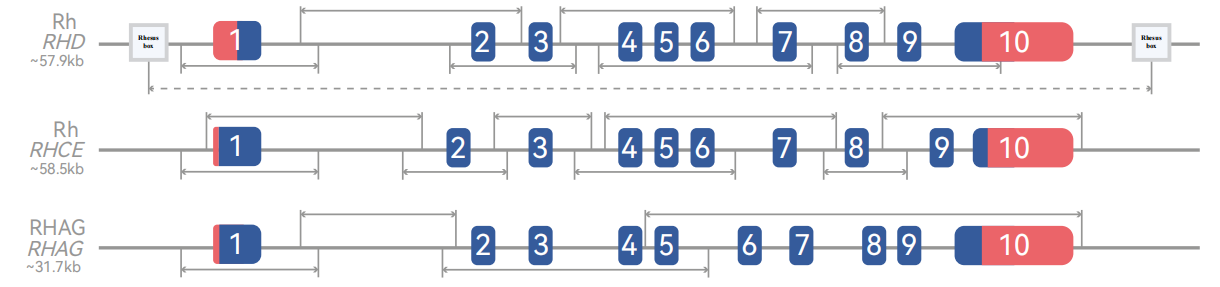
Serologic identification of RHD weak D, partial D, and DEL phenotypes is notoriously challenging. Susceptible to variable factorssuch as antibody reagent quality and operator technique, these groups are frequently misclassified or missed entirely. Furthermore, conventional molecular assays struggle to resolve the high sequence homology between RHD and RHCE genes, which are susceptible to structural variations. This makes complex recombinant events difficult to characterize and often requires multiple assays for definitive classification.
To overcome, our preitry assays adopted long-read sequencing to address these limitations by delivering contiguous, haplotype resolved detection of the entire RHD locus, enabling the clear and precise detection of those blood group resulted by complex variations.
Highlights
Comprehensive Full-Length Sequencing of RHD, RHCE, and RHAG
Definitive Resolution of Weak D, Partial D, and DEL Variants
Unambiguous Phasing of Complex Rearrangements and Hybrid Genes
High-quality Sequencing Data (Raw read quality > Q30)
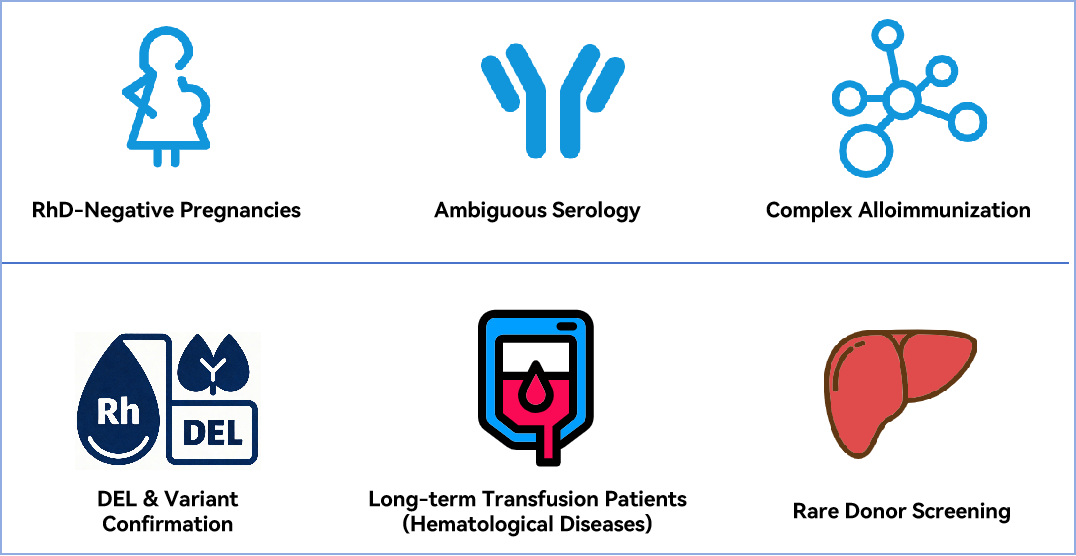
Application Areas
Benifits
1. For the hospital/blood bank
Reduce labor costs and reagent costs
Faster TAT for complex/weak Rh phenotypes
Optimize rare/Rh-negative blood use, eliminate DEL false-negatives
Build Rh donor database for rare matching
2. For the patient
Better quality of life for transfused patients
Shorter hospital stay around transfusion
Longer intervals between transfusions
Lower risk of Rh-related adverse reactions


 WeChat QR Code